
More than a quarter of merchants use the Magento platform to run their business digitally, and this number grows by the day. Magento has a vast pool of features, so it is no doubt the best platform today to run an e-commerce website. Moreover, it keeps releasing updates and upgrades. You can always expect something better with every new version. Now, however, the Magento 1 end of life is near.
Magento has released many versions of Magento 1.x, and all of them have been great. However, Magento 2 arrived as a completely new platform in 2015. Since then, there have been no major releases for Magento 1. Despite that, many legacy ecommerce applications still run on those old, obsolete versions. This can work out negatively for businesses. So if you still run any version of Magento 1.x, please read on and give it some thought.
There have been no new releases of Magento 1.x since 2015. On top of that, Magento has officially announced that it will end all support for Magento 1 in June 2020.
The Magento 1 End of Life Announcement
Here is what Magento’s official tweet says:
“We are committed to our Magento 1 merchant through June 2020, ensuring their sites are secure and compliant.”
We are committed to our #Magento 1 merchants through June 2020, ensuring their sites are secure and compliant. Learn how https://t.co/FLauq1sQ09 pic.twitter.com/bdJNpLFHvO
— Magento (@magento) September 6, 2018
| RELEASE | END OF SUPPORT |
| Magento 1.x Community Edition | |
| Community Edition 1.7 | June 2020 |
| Community Edition 1.8 | June 2020 |
| Community Edition 1.9 | June 2020 |
| Magento 1.x Enterprise Edition | |
| Enterprise Edition 1.12 | June 2020 |
| Enterprise Edition 1.13 | June 2020 |
| Enterprise Edition 1.14 | June 2020 |
This means that Magento 1.x will still be accessible and usable, but it will no longer get any official support. This is a worrying situation for merchants who still run their eCommerce business on Magento 1.x, because security patches will be missing. An eCommerce portal is one of the strongest pillars of business growth in this digital world. Running a website without security measures can pose serious security threats. The version will also get no new features.
Migrating to the latest version or to another content management system will help you run the website without hindrance. Magento also extended its support until June 2020. This gives merchants enough time to work out migration strategies and move to the latest Magento versions safely.
Factors to Consider Before Migrating from Magento 1 to Magento 2
Before you migrate the eCommerce site to the latest Magento version, you need a strong analysis. Consider factors such as data backup, database migration, SEO data, website design, website theme, and the plugins you use.
Advantages of Migrating the site to Magento 2
⦁ Magento 2 uses an updated generation of PHP, which amplifies the website flexibility.
⦁ Website speed is one of the most critical factors. Magento 2 provides powerful caching, which results in faster page downloads.
⦁ Most end-users prefer mobile phones. To reach this audience, the website needs to be mobile-friendly and responsive. Magento 2 provides enhanced features to make the website fully responsive on every device type.
⦁ A significant digital presence is essential, and SEO plays a crucial role in it. Magento 2 provides better SEO than Magento 1.
⦁ To keep the website safe from intruders, Magento 2 supports updated security features.
We encourage all Magento 1 merchants to switch to a more secure solution that keeps their business running untroubled.
Also Read:
How can you improve Magento Performance with Magento 2.3 Version?
Proposed Strategy for Migration from Magento 1 to Magento 2
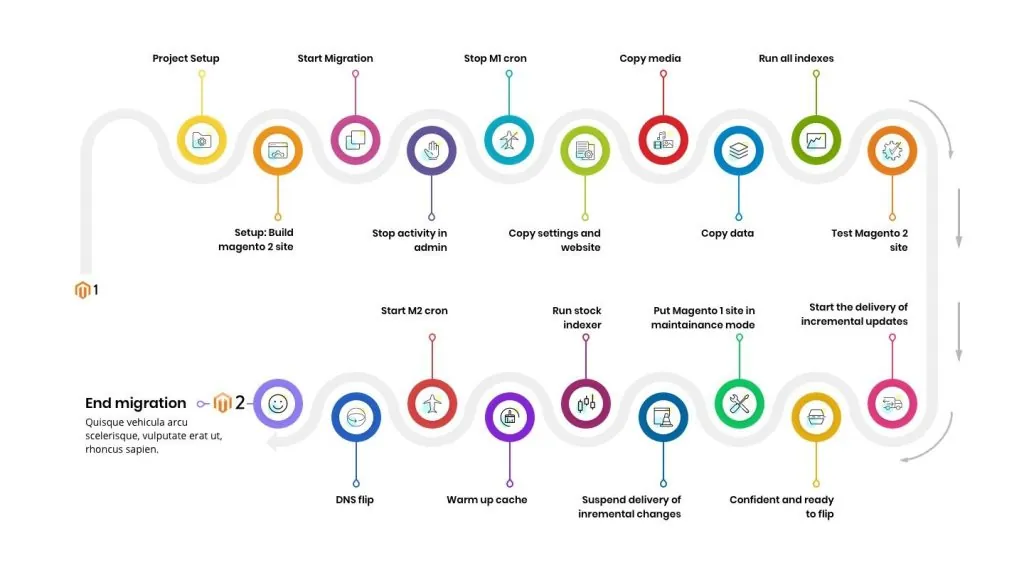
It is nearly impossible to keep running smoothly for long without any support. This makes migration to Magento 2.x inevitable. Plan for it starting today and equip your business for the upcoming challenges, so your ecommerce website can scale to the maximum. Need help? See our web development services.
Need a website or web app?
We build on WordPress, Webflow, Shopify, Bubble and custom stacks.